Early childhood education is a game-changer in child development. It’s a time when your child’s future potential is shaped. As parents, you have a big role in helping your child grow. Let’s explore how early learning can change your child’s educational path.
The early years are crucial for brain development. During this time, your child learns skills that will help them later in life. These skills are key for thinking, social skills, and future success. Let’s dive into how early childhood education can set your child up for success.
Unveiling the Profound Impact of Early Learning
The early years of a child’s life are crucial for brain development. They set the stage for their future success. During this time, the brain grows fast and is very open to learning from the environment.
The Critical Window for Brain Development
In the first few years, a child’s brain grows a lot, making trillions of connections between neurons. This is the “critical window” for learning. By age 5, their brain is already 90% as big as an adult’s. Educational experiences during this time deeply affect a child’s thinking, social, and emotional growth.
Laying the Foundation for Future Success
Early childhood education is key in shaping a child’s brain and preparing them for the future. Studies show that kids who get great early education do better in school, have better social skills, and are more likely to graduate from high school and college. Early learning sparks curiosity and gives kids the tools to explore the world, preparing them for a lifetime of learning and growth.
“The first five years have so much to do with how the next 80 turn out.” – Bill Gates
Nurturing Cognitive and Social-Emotional Growth
Early childhood education is key to helping young minds grow fully. It’s not just about learning facts. These early years are vital for growing both cognitive and social-emotional skills. This approach helps kids do well in school and with friends.
Cultivating Cognitive Skills
The brain grows fast in early childhood. Good early education programs help by making learning fun. Kids learn to solve problems, think critically, and use language better. They get to explore and connect what they learn, preparing them for a lifetime of learning.
Fostering Social-Emotional Competence
Learning social and emotional skills is just as crucial. Early education helps kids understand and manage their feelings. It teaches them how to make friends and solve problems together. Kids learn to get along with others, which helps them in the future.
| Cognitive Development | Social-Emotional Development |
|---|
- Problem-solving skills
- Critical thinking
- Language and communication
- Curiosity and exploration
- Emotional awareness and regulation
- Empathy and social awareness
- Positive relationship building
- Conflict resolution and collaboration
Early childhood education helps kids grow in many ways. It prepares them to face life’s challenges and chances.
“The years from birth to age five are a critical window for brain development, laying the groundwork for a child’s future success.”
Education: The Key to Unlocking Potential
Early childhood education is key to a child’s future success. It starts their journey of knowledge building and skill development. This phase sparks a love for learning and gives them the basics needed to do well later on.
Building Blocks of Knowledge and Skills
Children start exploring the world in early childhood. They learn through fun, play-based activities. This helps them understand important subjects like reading, math, and science.
This strong start helps them face harder school challenges later. They become more confident in their learning.
- Literacy development: Mastering the building blocks of reading, writing, and communication
- Numeracy skills: Developing a strong grasp of mathematical concepts and problem-solving
- Cognitive abilities: Fostering critical thinking, problem-solving, and creativity
- Social-emotional skills: Nurturing empathy, self-regulation, and interpersonal abilities
Educators and parents play a big role in building these skills and knowledge early on. This sets the stage for success in school and life.
“The first few years of a child’s life are critical for building the foundation of learning, health, and well-being.”
Good early childhood education helps kids grow in many ways. It boosts their thinking skills and helps them deal with life’s challenges. With the right support, young learners can reach their full potential and start a journey of discovery and success.
Creating a Stimulating Learning Environment
In early childhood education, the learning environment is key. It shapes young minds in important ways. A good setting helps with thinking, social, and emotional growth. At the core is the power of play-based learning.
The Role of Play in Early Childhood Education
Play is more than fun; it’s a key part of learning. Through play, kids explore and learn about the world. Play-based learning helps them get important skills like solving problems, being creative, and managing feelings in a fun way.
- Encourages Hands-On Exploration: Play-based learning lets kids touch, feel, and discover the world around them.
- Fosters Imagination and Creativity: Playing pretend and telling stories boosts creativity and communication skills.
- Supports Social-Emotional Growth: Playing with others helps kids learn to share, work together, and solve problems.
By focusing on play, teachers help kids grow into well-rounded people ready for school and life.
“Play is often talked about as if it were a relief from serious learning. But for children, play is serious learning. Play is really the work of childhood.” – Fred Rogers
| Benefits of Play-Based Learning | Traditional Instructional Approach |
|---|---|
| Promotes active engagement and exploration | Emphasizes passive learning and rote memorization |
| Fosters creativity, problem-solving, and critical thinking | Focuses on standardized testing and predetermined outcomes |
| Supports social-emotional development and collaboration | Limits opportunities for social interaction and teamwork |
Early childhood educators should focus on play-based learning. This approach creates a stimulating and caring place. It sets the stage for a lifelong love of learning.
Choosing the Right Early Childhood Program
Finding the right early childhood education program for your child is a big decision. It’s important for their future. Parents need to think about several key factors for a good experience.
Factors to Consider for a Positive Experience
When looking at early childhood education programs, focus on the curriculum, teaching methods, and the place itself. These things make a program engaging and stimulating. They help young learners have a positive experience and make the right program selection.
- Curriculum: Choose programs with a full curriculum that covers thinking, social skills, feelings, and physical growth.
- Teaching Methods: See how teachers work with kids. Look for a caring, kid-focused way that encourages exploring and doing things by hand.
- Facility: Make sure the place is safe, clean, and right for kids. It should have lots of room for play and finding out about the world.
- Learning Environment: Look for a program with a positive vibe. It should help kids form good relationships, support their feelings, and make them love learning.
By looking at these things, parents can pick an early childhood education program that fits their family’s values. This way, their child gets a rich and positive experience.
“The early years of a child’s life are the most crucial for their development, and the right early childhood education program can lay the foundation for a lifetime of learning and success.”
Bridging the Home-School Connection
In early childhood education, the partnership between parents and teachers is key. This partnership helps build a child’s growth in both academics and social skills. By working together, we can make learning smooth and help children reach their best.
Working together, parents and teachers understand what each child needs. This makes learning more personal and helps kids feel part of the class. It also boosts their learning and makes them more engaged.
Good communication is the heart of this partnership. Regular talks and working together on goals keep everyone on the same page. This way, parents and teachers can share ideas and help the child grow.
- Have regular meetings to talk about the child’s progress and what they need to work on.
- Let parents help out in the classroom to make them feel part of their child’s learning.
- Use technology to make sharing info easy between home and school.
- Plan events and workshops for families to build a strong community feeling.
By working together, we make a place where kids can do their best. When parents and teachers share the responsibility of early childhood education, the sky’s the limit for a child’s success.
| Benefit | Description |
|---|---|
| Personalized Learning | Parents and teachers can make learning fit each child’s needs, helping them learn better. |
| Improved Communication | Talking and sharing info between home and school helps everyone understand and work together better. |
| Stronger Engagement | Parents helping out in their child’s learning makes them feel more connected and invested, leading to better learning. |
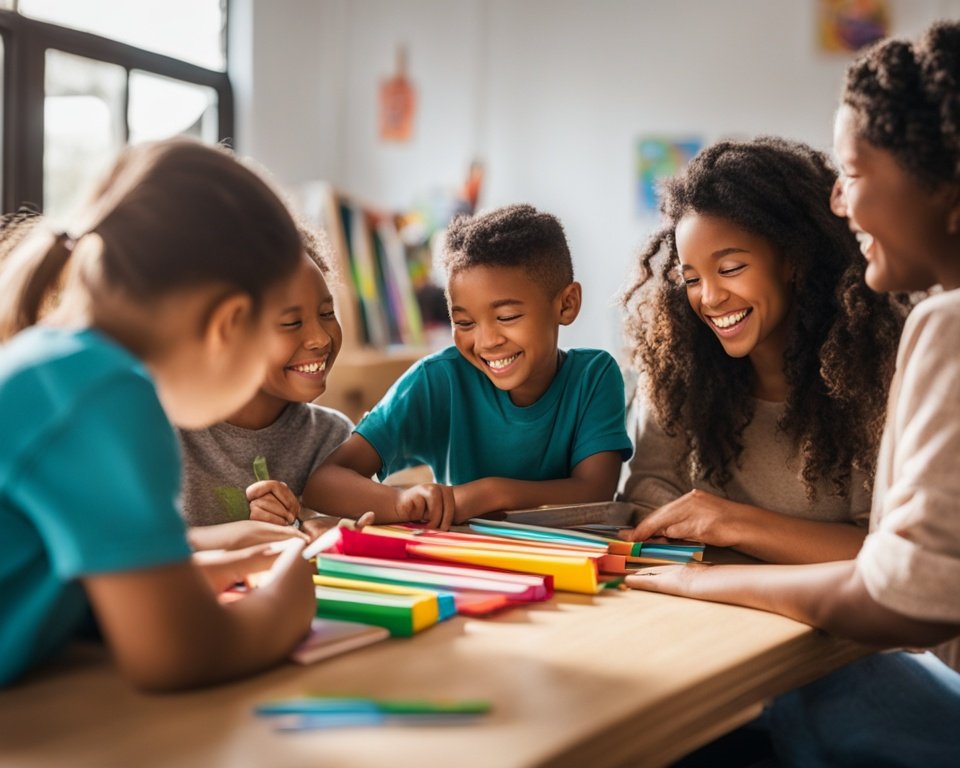
We aim to help the next generation by valuing the home-school connection. By working together, we can make the most of early childhood education. This leads to a brighter future for our kids.
Addressing Developmental Delays and Disabilities
In early childhood education, it’s key to meet the unique needs of every child. Children with developmental delays or disabilities face big challenges. But, with the right support, they can do great things and reach their goals.
Early Intervention and Support Services
Spotting and helping children early is crucial. Educators and health experts work together to give the right help. They make sure each child gets the support they need to succeed.
- Specialized therapies: Speech, occupational, and physical therapy can help children with developmental delays or disabilities improve their communication, motor skills, and independence.
- Assistive technologies: Innovative tools and technologies can enable children with disabilities to participate in educational activities and interact with their peers more effectively.
- Individualized education plans (IEPs): Tailored learning plans ensure that children with special needs receive the targeted support and instruction they require to achieve their academic and personal goals.
Early childhood education programs create a place where all children can thrive. They help kids with delays or disabilities beat challenges and reach their full potential.
| Intervention Service | Description | Impact on Child’s Development |
|---|---|---|
| Speech Therapy | Helps children develop language and communication skills | Improves verbal expression, comprehension, and social interaction |
| Occupational Therapy | Focuses on improving fine motor skills, sensory processing, and independence in daily activities | Enhances overall functionality and self-care abilities |
| Physical Therapy | Addresses gross motor skills, muscle tone, and physical mobility | Promotes physical development, coordination, and participation in play and learning |
Early childhood education programs offer special support and resources. This helps children with delays or disabilities overcome challenges and reach their full potential.
“Early intervention can make a significant difference in a child’s life, setting them on a path towards success and independence.”
The Long-Term Benefits of Quality Education
Investing in early education is a smart move for our kids and our future. Quality early childhood programs offer many benefits. These benefits can change lives and help our society.
Unlocking Future Success
Kids who go to top early childhood programs do better in school. These programs build a strong base for learning. They help develop key skills for success.
This early investment sets kids up for a bright future. They’re more likely to graduate, go to college, and get good jobs.
Nurturing Lifelong Learners
Early education does more than teach facts. It makes kids love learning. Kids who enjoy hands-on learning in early years keep being curious.
This curiosity helps them in school and life. They find more joy and fulfillment in learning.
Strengthening Communities
Quality early education helps more than just kids. It helps the whole community. Educated people make their communities better.
They improve health, cut crime, and make people more active and involved.
| Benefit | Impact |
|---|---|
| Academic Success | Higher graduation rates, increased college enrollment, and better employment opportunities |
| Lifelong Learning | Fostering a love of learning that can last a lifetime |
| Strengthened Communities | Improved public health, reduced crime rates, and a more engaged and productive citizenry |
Investing in early childhood education is smart. It’s for our kids, our communities, and our future. It’s key to a brighter future for the next generation.
Fostering a Love for Learning from the Start
In early childhood education, the magic is in sparking a true love for learning from the start. Young minds begin their educational journey, and it’s key to build a love for knowledge that lasts. This love will guide them through their lives.
By creating a space that values curiosity, exploration, and the joy of discovery, we help children want to learn more about the world. They start to see learning as exciting, from asking questions to feeling proud of their discoveries. This is how early education starts a lifelong love for learning.
When kids get to ask questions, do hands-on activities, and explore what interests them, they grow. They learn to love learning and keep growing. This love for learning and curiosity helps them do well in school and in life.