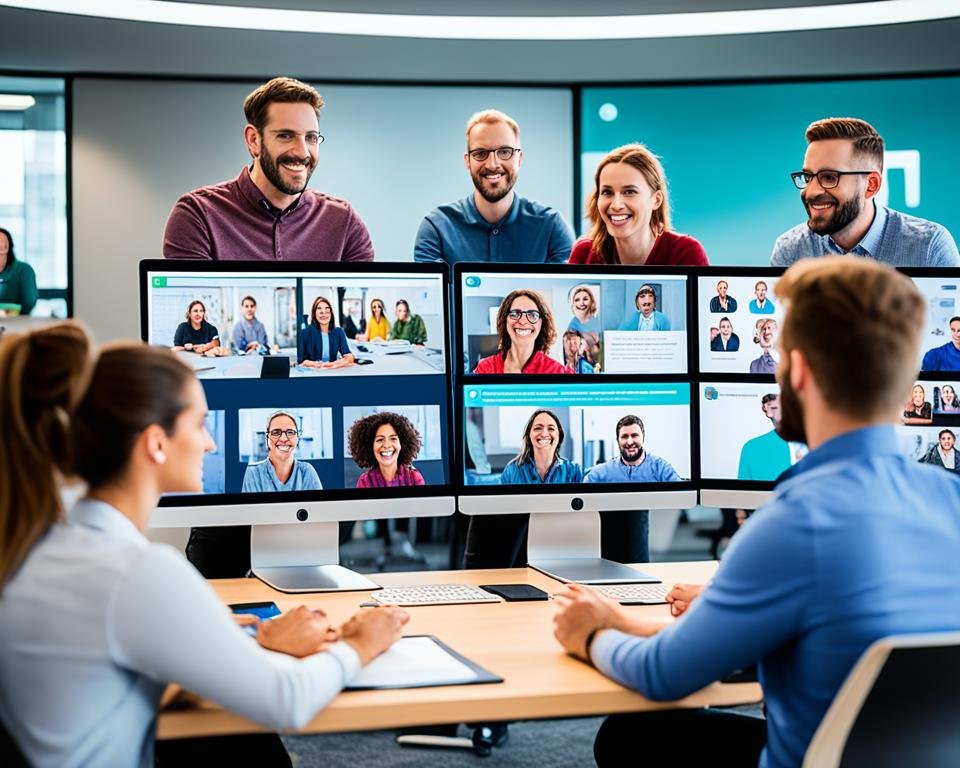
Distance education has changed how we learn in today’s digital world. This guide shows you the best ways to succeed in online classes. You’ll learn how to use multimedia resources and thrive in the changing world of online learning.
Adjust to the new digital world by using the latest online tools to get better grades. Create a good study space, learn to manage your time well, and build a support network online. Stay motivated and keep learning throughout your life in the digital age.
Learn about how to do well in online tests, keep your online world safe, and see how distance education is changing with new technologies. Start this exciting journey and see what distance education, online learning success, and remote teaching can do for you.
Embrace the Virtual Classroom Revolution
The traditional classroom is now moving to the virtual world. Distance learners must adjust to this digital paradigm shift. It’s key to use the latest virtual classroom tech and online tools to do better in school.
Adapting to the Digital Paradigm Shift
Switching to a virtual classroom might feel tough at first. But, with the right attitude and plans, it can change your life. Enjoy the ease and flexibility of digital learning. Check out the many online tools that can help you in your studies.
Leveraging Online Tools for Academic Excellence
- Get to know video conferencing tools like Zoom or Google Meet for joining virtual lectures and talks.
- Use cloud tools, such as Google Drive or Microsoft 365, for easy group projects and sharing files with friends.
- Find apps and websites that fit how you learn best, like interactive games, podcasts, or virtual study groups.
By jumping into the virtual classroom and using online tools, you can find new ways to succeed in school. This will help you make the most of your digital learning journey.
“The future of education is digital, and those who embrace it will thrive in the 21st-century learning landscape.”
| Online Tool | Key Features | Benefits for Distance Learners |
|---|---|---|
| Zoom | Video conferencing, screen sharing, virtual whiteboards | Enables real-time interaction and collaboration in virtual classrooms |
| Google Drive | Cloud-based file storage and sharing, collaborative document editing | Facilitates seamless group work and project management from any location |
| Coursera | Massive Open Online Courses (MOOCs), certificates, and degrees | Provides access to a wide range of educational content and credentials |
Cultivating a Productive Online Learning Environment
Today, having a dedicated study space is crucial for doing well in online classes. It’s important to make an online learning area that has few distractions and helps you stay productive. This is essential for doing well in the online classroom.
Creating a Dedicated Study Space
Choosing a specific spot for studying can really help you focus better. It could be a quiet spot in your home or a special workspace. The main idea is to make a place that helps you learn well. Avoid setting up your study space in high-traffic areas or near sources of noise and commotion. Pick a spot where you can fully focus on your studies without interruptions.
- Identify a well-lit, distraction-free area in your home
- Ensure your desk or table is organized and clutter-free
- Invest in a comfortable, ergonomic chair to support your posture
- Eliminate potential distractions, such as television, social media, or mobile devices
By making a online learning environment and study space, you’ll be ready to stay focused and work well during remote learning sessions.
“A dedicated study space helps me stay focused and organized during my online classes. It’s a game-changer for my productivity.”
– Jane Doe, Distance Education Student
| Factors to Consider | Ideal Study Space |
|---|---|
| Lighting | Bright, natural light or adjustable task lighting |
| Noise Level | Quiet, with minimal external distractions |
| Seating | Comfortable, ergonomic chair that supports proper posture |
| Desk/Table | Organized, clutter-free surface for studying and working |
Mastering Time Management in the Digital Age
In today’s fast-paced world, managing time well is crucial for success in online learning and remote education. Students need to learn how to set priorities, avoid distractions, and make a schedule that helps them work better. This is key to doing well in school.
One important step is to set up a study area. Choosing a specific place for studying helps students focus and keeps them away from distractions. This simple action helps them balance their school and personal life better.
Another good idea is to plan out your day or week. This way, students can make sure they have enough time for everything, like classes, homework, and studying. Planning helps them stay organized, avoid missing deadlines, and learn more effectively.
- Prioritize tasks based on due dates and importance
- Incorporate regular breaks to avoid burnout
- Limit distractions by silencing notifications and minimizing multitasking
- Leverage productivity apps and online tools to streamline your workflow
Learning how to manage time well is key for students in the digital age. By using these strategies, they can overcome the challenges of online learning, stay focused, and reach their goals.
| Time Management Strategies | Benefits |
|---|---|
| Establish a dedicated study space | Improved focus and reduced procrastination |
| Create a detailed daily or weekly schedule | Enhanced organization and productivity |
| Prioritize tasks based on due dates and importance | Efficient use of time and reduced stress |
| Incorporate regular breaks | Improved concentration and prevention of burnout |
| Limit distractions and minimize multitasking | Increased focus and task completion |
| Leverage productivity apps and online tools | Streamlined workflow and enhanced time management |
“Time management is not about being more efficient at doing things, but about doing the right things.” – Angie Morgan
Forging Connections: Building a Virtual Support Network
In distance education, having a strong virtual support network is key to doing well. The digital world might seem lonely at first, but joining forces with peers and getting help from teachers can change everything. It makes your learning journey better.
Fostering Peer-to-Peer Collaboration
Working together is the secret to making the most of online classes. Use forums, video calls, and group study sessions to meet other students. Talk about big ideas, share what you know, and team up for projects. This virtual support network keeps you driven and teaches you how to work with others and communicate well.
Seeking Guidance from Instructors and Mentors
Your teachers and mentors are great resources for peer collaboration and instructor guidance. Always ask them questions, get feedback, and use their knowledge. Virtual office hours, emails, and one-on-one meetings can give you the help you need to overcome distance learning challenges.
“The beauty of online learning lies in the ability to connect with a global community of peers and mentors, fostering a dynamic and supportive virtual environment.”
By taking advantage of chances to work together and get advice, you can create a strong support network. This network will boost your academic success and help you reach your goals.
Education: Unlocking the Power of Self-Motivation
In today’s world, online learning and distance education are key. Self-motivation is crucial for doing well. Students need to find their drive to succeed in this new way of learning.
It’s important to be resilient and determined. Set your own goals and plan how to reach them. Turn big tasks into smaller steps and celebrate your wins. See challenges as chances to grow and get better.
Make a study routine that helps your self-motivation. Set aside time to study without distractions. Use good time management to keep up and make the most of your study time.
Be around people who love online learning as much as you do. Join online study groups and talk with others. Get advice from teachers. These people can help keep you going.
Distance education lets you learn in a way that fits you best. Use different kinds of resources and activities that work for you. Be proud of your successes, big or small, and let them push you forward.
With self-motivation, you can reach your highest potential in remote learning. Embrace the journey, celebrate your wins, and let your drive lead you to success.
“Motivation is crap. Motivation is for amateurs. Motivation is cheap. Passion is sustainable.”
Harnessing the Potential of Multimedia Resources
Distance education has changed how we learn, offering many multimedia resources and tools. These include video lectures and podcasts that make learning more engaging. They help us understand and connect with our course material better.
Enriching Learning with Interactive Tools
Tools like online learning platforms and interactive tools are key in distance education. They make learning fun and interactive. They also help us grasp tough topics better.
Virtual simulations let students try out real-world situations safely. Collaborative platforms help students share ideas and work on projects together, even from far away.
By using multimedia resources, distance learners can explore new ways to learn. They can use interactive visuals, join online discussions, and watch educational videos. These tools make learning more lively, engaging, and effective.
“Leveraging technology in distance education not only enhances the learning process but also prepares students for the digital future they will navigate.”
As distance education changes, using multimedia resources and interactive tools is key. These technologies help us learn in new ways. They help distance learners reach their academic goals and make the most of online learning.
Striking a Balance: Integrating Online and Offline Learning
In today’s world, online learning is very tempting. But, it’s important to balance online and offline learning. This balance helps students get the most out of their education and learn in a complete way.
Online learning has many benefits, like interactive multimedia and tools for working together in real time. By using online and offline learning, students can get the best of both. Mixing remote education with traditional classes makes learning fun and engaging.
To find the right balance, try these tips:
- Make a study area that has both online and offline tools. This helps you stay focused and productive.
- Use blended learning by adding hands-on activities to online lessons. This makes learning more interesting.
- Have group discussions or study sessions offline to work together and support each other.
- Do offline tasks, like experiments or fieldwork, to make what you learn online more real.
By balancing online and offline learning, students can make the most of their education. This way, they get the benefits of both digital and traditional learning.
“The key to success in distance education is to find the right blend of online and offline learning experiences.”
Using online and offline learning together improves grades and teaches important skills like managing time, being disciplined, and thinking critically. As education changes, this balanced way of learning will be key for remote education and the success of future leaders.
Embracing Lifelong Learning in the Digital Era
In today’s fast-changing digital world, lifelong learning is more important than ever. Technology is changing jobs, so workers need to keep learning to get ahead. This helps them grow personally and professionally.
Continuous Professional Development Online
Online learning has become a key way to keep learning. It lets people fit learning into their busy lives easily. With online courses, webinars, and e-learning, there are many ways to improve skills and keep up with trends.
Online learning lets you focus on what you want to learn. You can pick from many subjects, like tech skills or leadership. This way, you can make your learning fit your goals and dreams.
- Develop in-demand technical proficiencies
- Enhance communication and interpersonal skills
- Gain insights into industry best practices and emerging trends
- Earn certifications and credentials to boost career prospects
By using online education for lifelong learning, professionals can keep growing. They can stay updated and open new doors for their careers.
“The beautiful thing about learning is that no one can take it away from you.” – B.B. King
Navigating the Challenges of Remote Assessments
Remote assessments and online test-taking are both a blessing and a challenge in distance education. The digital world offers flexibility and convenience. But, it also brings unique challenges that students need to tackle carefully. Learning how to do well in online tests is key in today’s classrooms.
Strategies for Effective Online Test-Taking
To do well in remote assessments and online test-taking, students need a good plan. Here are some tips to help you succeed in distance education:
- Get to know the online test platform. Explore its features and understand how the assessment is structured. This will make you feel more ready and confident during the test.
- Make a dedicated study area that helps you focus. It should have good internet and be free from distractions.
- Manage your time well. Give enough time to each section or question. Good time management is key for doing well in online test-taking.
- Use active learning methods, like self-quizzing and practice tests, to improve your understanding. This will help you remember the material better during the test.
- Keep a positive attitude and use stress-reducing techniques to stay calm during the test. Take deep breaths, drink water, and don’t worry too much.
By using these strategies, students can overcome the challenges of remote assessments. They can show off their knowledge and skills in the online classroom.
| Technique | Description | Benefits |
|---|---|---|
| Familiarize with Platform | Explore the online test interface and understand its features | Increased confidence and comfort during the assessment |
| Optimize Environment | Create a distraction-free study space with reliable internet | Improved focus and productivity during the test |
| Develop Time Management | Effectively pace yourself and allocate time for each section | Enhanced performance and better time utilization |
| Practice Active Recall | Engage in self-quizzing and practice tests to reinforce learning | Improved information retention and recall during the assessment |
| Stay Calm and Focused | Employ stress-management techniques and maintain a positive mindset | Reduced anxiety and enhanced cognitive function during the test |
“Effective online test-taking is not just about mastering the content, but also about harnessing the digital tools and strategies to showcase your knowledge with confidence.”
Cybersecurity and Online Safety for Distance Learners
Remote learning is now common, making it key to protect your info and online actions. Cybersecurity and online safety are vital for those learning from afar. They ensure your learning stays safe and smooth.
Those learning at a distance need to watch out for cyber threats like phishing, malware, and unauthorized data access. Using strong cybersecurity steps can lower these risks. This keeps your learning safe and sound.
Fortifying Your Digital Fortress
To boost your online safety, take these steps:
- Use strong, unique passwords for all accounts and turn on two-factor authentication if you can.
- Keep your devices and software updated with the latest security patches and updates.
- Be wary of suspicious emails, links, and downloads, and check if online resources are trustworthy before using them.
- Use a reliable VPN to encrypt your internet and keep your data safe from others.
Safeguarding Your Digital Footprint
It’s also important to think about how you act online and what info you share. Remember:
- Don’t share too much personal info on public places or online chats.
- Check the privacy settings and permissions of digital tools and apps you use for school.
- Don’t look at sensitive school materials or do school work on shared or public devices.
By focusing on cybersecurity and online safety, you can make a safe and effective learning space online. This lets you do well in your studies and keep your online life safe.
“Cybersecurity is not just an IT issue, it’s a fundamental part of our daily lives as digital citizens.” – Cybersecurity Expert, Jane Doe
| Cybersecurity Best Practices | Online Safety Tips |
|---|
- Use strong, unique passwords
- Enable two-factor authentication
- Keep software up-to-date
- Use a reliable VPN
- Limit personal information sharing
- Review privacy settings
- Avoid public devices for sensitive work
The Future of Distance Education: Trends and Innovations
The digital revolution is making distance education brighter than ever. Get ready for a big change in how we learn online. New technologies like adaptive learning and augmented and virtual reality are leading the way. They promise to change how we learn from afar.
Augmented and Virtual Reality in Online Learning
Picture a world where learning isn’t just on a screen. Augmented reality (AR) and virtual reality (VR) are changing online learning. They bring learning to life in three dimensions, making it more engaging.
Students can explore virtual worlds, like dissecting a virtual frog or conducting experiments in a digital lab. These tools are making learning unforgettable. As they improve, distance education will become more exciting and memorable.
AR and VR are just the start. Adaptive learning, powered by artificial intelligence, will tailor education to each student. Cloud-based tools will also help students connect with each other, even from far away. Get ready for a brighter future in distance education.